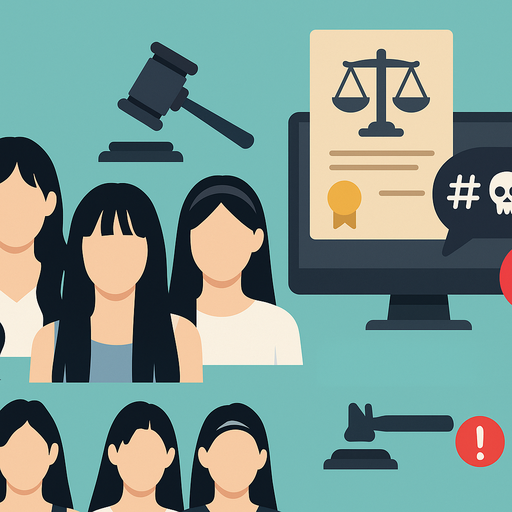

Online users who targeted NewJeans with malicious comments and manipulated images are now facing real legal penalties in Korea, signaling a turning point in how the K‑POP industry responds to digital abuse.
In recent months, prosecutors and courts have issued summary prosecutions and penal orders, including fines, against individuals who created deepfake-style content or repeatedly posted defamatory remarks about the group. These developments, triggered in part by fan reports, are drawing intense attention in K‑POP communities and raising questions about fandom protection and platform responsibility.
Legal penalties for malicious commenters targeting NewJeans
Multiple Korean outlets report that individuals who edited and manipulated images of NewJeans members, spread false information on social media, or left continuous hate comments on online communities have been investigated and penalized. In several cases, prosecutors pursued summary indictment procedures, and courts responded with summary orders imposing fines.
Verified factual statement: Some netizens who posted malicious or manipulated content about NewJeans received criminal penalties in the form of summary prosecutions and court‑imposed fines.
These are not symbolic slaps on the wrist. One case involving sexually explicit manipulated videos led to a fine in the millions of won range and mandatory completion of a sexual‑violence treatment program, underscoring how seriously courts now treat image‑based abuse using idols’ faces.
How fandom reports helped trigger investigations
A key point in this NewJeans case is the role of fans. According to Korean reports, organized fan complaints and evidence submissions were a major reason dozens of accounts were referred to prosecutors without detention.
In the broader K‑POP industry, this reflects a growing pattern:
- Fandoms systematically collect screenshots and URLs of malicious posts.
- They submit them to law firms or directly to agencies.
- Agencies then file criminal complaints for defamation, insult, and distribution of false information.
This NewJeans situation is being cited domestically as a textbook example of how coordinated fan action, combined with agency monitoring, can lead from SNS reports to real‑world legal consequences.
Why this matters for K‑POP agencies and platforms
For years, many fans felt that legal notices about “zero tolerance” were more PR than practice. The recent penalties involving NewJeans show that, at least in some cases, proceedings are moving all the way through investigation, prosecution, and sentencing.
From an industry‑wide perspective:
- Agencies are under pressure to actively protect minors and young artists from sexualized deepfakes and hate campaigns.
- Music platforms and major communities are being pushed to respond faster to deletion requests and cooperate with investigations.
- Fans are increasingly expecting transparent updates on how far each case has progressed.
While exact numbers of all ongoing NewJeans‑related cases are not fully disclosed, the confirmed fines and penal orders already function as a strong warning to would‑be offenders.
Impact on fandom culture and future controversies
Within K‑POP, online behavior around comebacks, teaser images, and performance stages is often intense. When criticism crosses into targeted harassment or sexual humiliation, it now appears far more likely to be met with legal action.
For NewJeans, this wave of penalties may:
- Encourage more fans to document and report malicious content instead of engaging in flame wars.
- Deter some users from posting defamatory comments on communities and SNS.
- Push agencies to refine their monitoring systems across Korean portals, global social platforms, and even private chat channels.
At the same time, it raises an important discussion: how to balance legitimate critique of music, concepts, or stage performance with clear boundaries against personal attacks and manipulated imagery.
Key Takeaways
- Courts and prosecutors in Korea have issued fines and penal orders against individuals who posted malicious comments and manipulated images targeting NewJeans.
- Many of these cases began with fan‑led reports and evidence collection, later picked up by investigative authorities.
- The NewJeans examples are now widely referenced in K‑POP media as proof that online abuse can carry real criminal consequences, especially for deepfake‑style content.
FAQ
Q1. What kind of posts led to penalties in the NewJeans cases?
Based on available reports, penalties involved maliciously edited or manipulated images of members, sexually suggestive or humiliating fake content, and repeated defamatory or insulting comments on social media and online communities.
Q2. Does this mean all negative comments about idols are illegal?
No. In general, Korean law distinguishes between lawful opinion or criticism and unlawful defamation, insult, or distribution of false information. Simple dislike of a song, concept, or stage is usually not criminal; targeted personal attacks, fabricated claims, or sexualized manipulation of images can be.
Q3. How can K‑POP fans usually respond if they see malicious posts?
Industry‑wide, fans often capture screenshots, save URLs, and submit them through official reporting channels provided by agencies or fandom legal teams. Authorities then decide whether the behavior meets the threshold for investigation and potential prosecution.
Looking ahead
The NewJeans malicious‑comment cases suggest that the era of consequence‑free online abuse toward idols is slowly closing. As agencies, courts, and fandoms coordinate more closely, future controversies around deepfakes, hate comments, and false rumors are likely to be judged not only in the court of public opinion, but also in actual courtrooms. For NewJeans and other K‑POP acts, this shift could become a crucial layer of protection as their music, comebacks, and stages continue to dominate both charts and online discourse.


Leave a Reply