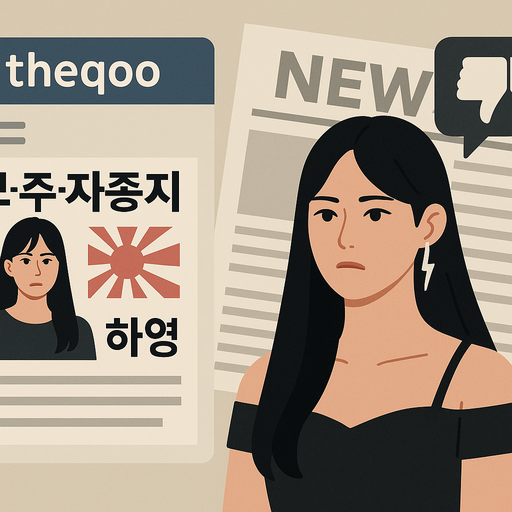
Korean online communities are once again at the center of a major K‑POP controversy. On August 12, 2026, posts about entertainer Ha-young spread rapidly on TheQoo, focusing on reports that her ancestral background includes figures described as pro-Japanese collaborators. As links to Korean news articles circulated, criticism intensified and users began debating how this revelation could affect her public image and future activities.
Ha-young controversy: how the issue surfaced
According to community activity on August 12, 2026, threads about Ha-young’s alleged ancestral background started trending in the evening on TheQoo. Users shared links to Korean news coverage and discussed historical records that reportedly connect her family line to individuals described as pro-Japanese during the colonial era.
Based on currently available information, the controversy centers on claims that Ha-young’s ancestors include figures labeled as pro-Japanese collaborators, which many Korean netizens view as a serious issue tied to historical responsibility.
At the time of writing, it appears that detailed official statements or clarifications directly from Ha-young or her agency have not been clearly highlighted in community summaries. Most of the conversation is driven by netizen interpretations of the shared articles and posts.
Why pro-Japanese collaborator allegations hit K‑POP especially hard
In the Korean entertainment industry, historical issues related to Japanese colonial rule are extremely sensitive. K‑POP idols and entertainers are often expected to maintain a public image that aligns with mainstream perceptions of historical awareness and national identity.
When an entertainer becomes linked, even indirectly, to pro-Japanese collaborators, several patterns typically emerge in the industry:
- Heightened public scrutiny of past interviews, variety appearances, and social media posts.
- Demands for clarification, apology, or at least a transparent explanation.
- Debate over whether private family history should impact a celebrity’s current career.
In Ha-young’s case, TheQoo threads characterize the issue as damaging to public trust. Users are actively discussing whether her perceived image and brand deals, variety appearances, or future casting opportunities might be affected, even though no concrete professional measures have been officially outlined.
Community reactions and K‑POP fan culture dynamics
TheQoo is one of the most influential Korean online communities for real-time K‑POP reactions. When a topic reaches the hot board, it often spreads quickly across other platforms such as Twitter (X), Instagram comments, and various fan cafés.
In general, within the K‑POP industry:
- Rapid community spread can shape early public opinion before agencies respond.
- Screenshots of posts, teaser images, and past stage clips are re-evaluated through the lens of the new controversy.
- International fans may receive information later, often through translated summaries and SNS threads.
For this particular Ha-young controversy, the focus is not on a comeback teaser or new song concept, but on historical and ethical questions. Still, the same mechanisms that push a fancam viral or a chart movement discussion into the spotlight are now amplifying criticism and calls for accountability.
Possible impact on Ha-young’s career and industry trends
Community posts on August 12 are already debating potential professional consequences for Ha-young. While no specific schedule changes or cancellations have been confirmed in the summary, several general industry scenarios are being discussed by observers:
- Temporary reduction in public activities while monitoring public sentiment.
- Careful management of music platform promotions, stage appearances, and variety show concepts to avoid further backlash.
- Heightened sensitivity in casting decisions for historical dramas, CFs, and public campaigns.
In many past K‑POP and entertainment cases, controversies tied to historical or social issues have led agencies to adjust promotion plans, even when the issue did not directly involve criminal behavior.
From an industry-trend perspective, this situation reinforces how fragile an entertainer’s image can be in the era of real-time SNS reactions. Even when the controversy is about ancestry rather than personal actions, the pressure for visible reflection and responsible communication remains strong.
Key Takeaways
- On August 12, 2026, posts about entertainer Ha-young’s alleged pro-Japanese ancestral background spread rapidly on TheQoo, linked to Korean news coverage.
- The controversy centers on historical responsibility and public trust, not on a specific comeback, new song, or stage performance.
- Community discussions are actively debating whether Ha-young could face professional consequences, though concrete measures have not yet been clearly outlined.
- The case highlights how K‑POP image-making, SNS reactions, and historical issues intersect in today’s entertainment landscape.
FAQ
Q1. What exactly is being alleged about Ha-young?
Based on currently available summaries, community posts claim that Ha-young’s ancestral background includes figures described as pro-Japanese collaborators, leading to criticism and calls for accountability.
Q2. Has Ha-young or her agency released an official statement?
From the information reflected in community discussions, a clear, detailed official response has not been emphasized yet. It appears that most of the debate is driven by netizen interpretations of linked news articles.
Q3. Could this affect her future K‑POP activities?
In general, historical or social controversies can influence casting decisions, promotions, and public image in the Korean entertainment industry. Whether Ha-young will face concrete changes to her activities remains unknown and will likely depend on future responses and public sentiment.
Looking ahead: what this means for K‑POP
As a 32-year-old K‑POP journalist observing the scene, this controversy feels like another reminder that the industry is no longer just about catchy hooks and powerful stages. Historical awareness, family background, and perceived values are now deeply intertwined with an idol’s brand. How Ha-young, her agency, and the wider industry navigate this moment will be closely watched—not only by Korean netizens, but also by global K‑POP fans who are increasingly sensitive to issues of history and accountability.
Leave a Reply