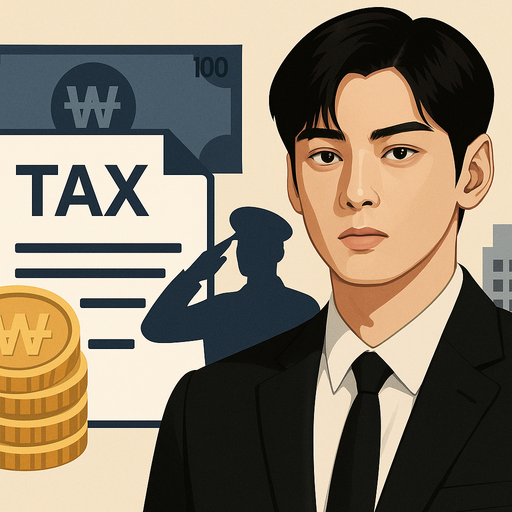

Cha Eun-woo of ASTRO is at the center of a major legal controversy after reports that Korea’s National Tax Service (NTS) notified him of an additional income tax assessment of around 20 billion KRW. As the issue expands beyond a simple tax audit into military, advertising, and public-sector reactions, the case is rapidly becoming one of the most closely watched K‑POP legal stories in recent years.
Cha Eun-woo’s 20 Billion KRW Tax Allegation: What Was Reported
Media reports in Korea have stated that Cha Eun-woo underwent a high-intensity tax investigation by the Seoul Regional Tax Office and was notified of an additional income tax bill estimated at over 20 billion KRW. The controversy centers on whether a corporation linked to his family, reportedly established under his mother’s name, functioned as a substantive entertainment business or as a paper company used to secure lower corporate tax rates instead of higher personal income tax rates.
Based on currently available reports, the core dispute is whether Cha Eun-woo’s family-related corporation is a real operating entity or a paper company created to reduce his tax burden.
At this stage, the NTS assessment itself has been reported, but a final legal conclusion on whether tax evasion occurred has not been publicly confirmed. In the K‑POP industry, it is not unusual for high-earning artists to use corporate structures for income management, but the legitimacy of those structures is often scrutinized when tax authorities suspect a lack of substantive business activity.
Fantagio’s Official Position and Ongoing Administrative Procedures
On January 27, Cha Eun-woo’s agency Fantagio released an official statement addressing the situation. The company acknowledged the controversy involving both the agency and its artist and emphasized that the matter is still in the stage of fact-checking by tax authorities.
Fantagio has stated that both the agency and Cha Eun-woo are faithfully cooperating with the tax procedures and that they will take necessary measures once legal and administrative determinations are finalized, while asking the public to refrain from excessive speculation and unverified rumors.
From an industry perspective, this type of wording is typical when a case is under active review. Agencies generally avoid confirming detailed numbers or legal interpretations until a final ruling or settlement is reached. For now, the official line is that the investigation and appeal process are ongoing, and nothing has been fully settled.
Local Government Checks, Address Changes, and Public-Sector ‘Erasing’ Moves
According to Korean reports, the controversy has triggered additional scrutiny around related corporate entities, including on-site checks by local government authorities and coverage of address changes for the family-linked company. These developments have fueled public interest because they suggest the issue is not confined to a single tax bill but touches on how the company was registered and operated over time.
In parallel, public-sector and advertising partners have begun distancing themselves. A notable example is the Defense Media Agency (under Korea’s Ministry of National Defense), which made a promotional video featuring Cha Eun-woo private on its official YouTube channel after the allegations gained traction.
The promotional video in which Cha Eun-woo appeared as a military band soldier and public-relations figure was switched to private, illustrating how quickly public institutions react to reputational risk once a legal controversy involving a celebrity surfaces.
In the commercial sphere, multiple reports describe advertisers and brand partners quietly reducing Cha Eun-woo’s exposure on official channels. Within the K‑POP ecosystem, this kind of rapid “erasing” or downscaling of visibility is a common risk whenever a top idol becomes embroiled in legal or moral controversy.
Impact on Cha Eun-woo’s Image, Military Service, and K‑POP Industry Trends
Cha Eun-woo is not only a member of ASTRO but also a leading drama actor and a high-value advertising model. Because of that, the alleged 20 billion KRW tax issue has implications that go beyond a single artist’s image.
From an image standpoint, the case challenges the “flawless” public persona that has followed him for years. In K‑POP, where visual branding, teaser images, and carefully curated SNS content are central to an idol’s value, a legal controversy of this scale can affect everything from casting decisions to comeback planning and global marketing strategies.
From an institutional standpoint, the fact that he is currently serving in the military adds another layer of sensitivity. When a soldier becomes the subject of a high-profile legal controversy, the military and affiliated organizations typically move quickly to minimize association, as seen in the Defense Media Agency’s decision to hide related video content. In general, within the K‑POP industry, such developments can delay future comeback discussions, alter endorsement renewals, and prompt agencies to reassess internal compliance systems.
Key Takeaways
- Cha Eun-woo is facing a reported additional income tax assessment of around 20 billion KRW, leading to widespread tax evasion allegations.
- His agency Fantagio has issued an official statement, stressing cooperation with authorities and asking the public to avoid excessive speculation.
- Local government checks on related corporations, reported address changes, and the Defense Media Agency’s move to privatize a promotional video show that the fallout now extends into public institutions and corporate partners.
- The controversy has triggered a broader “erasing” trend in entertainment and advertising, with stakeholders moving cautiously while legal and administrative procedures continue.
FAQ
Q1. Has Cha Eun-woo been officially found guilty of tax evasion?
Based on currently available information, authorities have reportedly issued a large additional tax assessment, but a final legal ruling or definitive conclusion on criminal tax evasion has not been publicly confirmed. The case remains under review through tax and administrative procedures.
Q2. What is Fantagio doing in response to the controversy?
Fantagio has stated that both the agency and Cha Eun-woo are faithfully cooperating with the tax investigation. The company has pledged to take responsible measures once legal and administrative decisions are finalized and has requested that the public refrain from unchecked speculation.
Q3. How is this affecting Cha Eun-woo’s activities and future K‑POP promotions?
He is currently serving in the military, and several public and commercial partners have already scaled back or hidden content featuring him. In general K‑POP practice, such a situation can delay or reshape future comeback planning, endorsement deals, and promotional strategies until the legal status becomes clearer.
Outlook: How This Case Could Reshape K‑POP Tax and Branding Norms
Looking ahead, Cha Eun-woo’s 20 billion KRW tax controversy is likely to become a reference point for how Korean tax authorities, entertainment agencies, and advertisers handle high-earning idols who use family-linked corporations. Regardless of the final legal outcome, the case is already prompting stronger internal compliance reviews, more cautious brand partnerships, and heightened public scrutiny of how K‑POP income is structured behind the scenes. For fans and industry watchers alike, the next key moment will be the official conclusion of the tax and administrative procedures—and how that result reshapes Cha Eun-woo’s career trajectory and broader agency strategies in the years to come.

Leave a Reply