

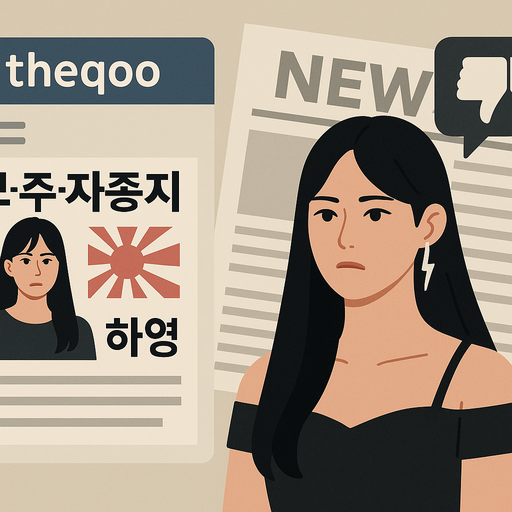
Korean online communities are once again focused on the Grammys, BTS, and the newly created “Asian Pop” category. On August 6, a widely-viewed thread on TheQoo gathered what was described as “internal testimony” about attempts to involve BTS in the category, sparking intense debate among K‑POP fans and general entertainment users.
Korean communities revisit BTS and Grammy controversy
According to the discussion on TheQoo, the post compiled an item framed as internal testimony about how the Grammys side allegedly tried to use BTS in relation to the “Asian Pop” category. The thread linked to previously shared posts and video clips, and quickly climbed into the site’s hot section, drawing in both ARMY and non-fandom users.
The current discussion is based on testimony circulating inside Korean communities, not on any new official statement from BTS or their agency.
Because the testimony itself is being relayed through community posts, users repeatedly reminded each other that it should be read as one version of events rather than confirmed fact. Still, the combination of BTS, Grammys, and a region-based award name was enough to reignite long-running arguments about how K‑POP is treated on global music stages.
How fans are framing the ‘Asian Pop’ category
In general, within the K‑POP industry, category debates tend to fall into two lines of thought:
- Some see region- or language-based categories as a way to give more visibility to non‑Western acts on major award shows.
- Others worry that such labels function as a separate box, limiting artists’ chances in top “general field” awards.
The TheQoo thread reflects this split. Commenters revisited past Grammy cycles, earlier reactions when the “Asian Pop” category was first announced, and the broader history of non‑English K‑POP tracks entering global award shows. For many Korean users, the key question is whether a category like this expands recognition or quietly reinforces a boundary between “mainstream pop” and “Asian pop.”
Debate over award submissions and precedent
A large portion of the discussion focused on how award-category submissions usually work. Based on general industry practice, award submissions are typically handled by labels and management teams, not by individual idols themselves. Korean commenters used this to debate:
- Who would have been in a position to discuss BTS’s potential placement in “Asian Pop.”
- How much strategic thinking goes into choosing between a genre category and a general category.
- Whether declining a specific category can be read as a stance on representation versus segregation.
Because the testimony circulating on TheQoo does not come with official documentation, users mainly compared it to what they already know from previous public statements and typical award-show procedures. Some posts tried to map out possible scenarios; others emphasized that, without direct confirmation, the exact internal conversations remain unknown.
SNS reactions and fandom discourse spill over
As is common with high‑profile K‑POP controversy topics, the TheQoo thread did not stay confined to one site. The discussion pattern described by Korean users is familiar:
- Hot posts on large community boards are screenshotted and shared on X (Twitter) and other SNS platforms.
- International fans pick up partial translations, sometimes focusing on the most provocative lines.
- The original nuance of Korean comments can be lost once they are condensed into short English captions.
In this case, the idea that BTS might have been “used” to legitimize the “Asian Pop” category became a focal phrase. Some fans interpreted the alleged internal testimony as proof of long‑suspected dynamics between the Grammys and K‑POP acts. Others urged caution, pointing out that the current viral narrative is still built on second‑hand accounts.
Why this TheQoo thread matters for K‑POP industry watchers
From an industry-analysis perspective, the latest TheQoo discussion is significant for several reasons:
- It shows how quickly Korean community discourse can shape the global framing of a controversy, even when based on unverified testimony.
- It highlights ongoing discomfort among K‑POP fans about region‑labeled categories on Western award shows.
- It underscores BTS’s unique position: as a group often treated as a benchmark for K‑POP’s global status, any hint of behind‑the‑scenes maneuvering around them becomes headline material.
For K‑POP agencies and global award organizers, threads like this are a reminder that fans closely track not only wins and losses, but also the logic of how categories are built and used.
Key Takeaways
- A hot TheQoo thread on August 6 shared alleged internal testimony about attempts to involve BTS in the Grammys’ “Asian Pop” category.
- The discussion is centered on community-circulated testimony, not on a fresh official statement from BTS or their agency.
- Korean commenters revisited long‑standing debates over whether region‑based categories expand recognition or reinforce separation.
- The topic quickly fed broader fandom discourse about award-category strategy, representation, and K‑POP’s place in global music.
FAQ
Q1. Has BTS or their agency released a new official statement about the ‘Asian Pop’ category in connection with this TheQoo thread?
Based on currently available information, the August 6 discussion is driven by testimony shared within Korean communities, not by a new official agency or artist statement.
Q2. Is it confirmed how the Grammys planned to use BTS in the ‘Asian Pop’ category?
No detailed official plan has been publicly confirmed. The current conversation stems from an item described as internal testimony, which users are debating and interpreting rather than treating as fully verified.
Q3. Who usually decides which Grammy categories a K‑POP act is submitted to?
In general, within the global music industry, award submissions are handled by labels, agencies, and management teams, often in consultation with artists, rather than by idols acting alone.
Looking ahead: what this means for future K‑POP award seasons
As more K‑POP acts enter major Western ceremonies, category design will remain a sensitive issue. The TheQoo testimony debate shows that fans are no longer satisfied with simply seeing “Asian” on the trophy; they want clarity on whether that label opens doors or quietly closes others. For BTS, the Grammys, and the wider K‑POP scene, how this “Asian Pop” controversy evolves could influence not only future submission strategies, but also how global awards choose to frame non‑Western pop in the years to come.

Leave a Reply